When I first arrived the new community I worked with, there were a number of people came to participate with their smiles and hopes. In the start up phase with the new community, there were not expected to gain a smoothly facilitate. It might refer to the community characteristic and the culture where people are living. The journey across the village to meet some people across the road or people nearby the road were what I can, to observe and learnt the people interest and their current situations.
Putuet village is not too far from the Modulkiri town but we required to stay overnight in the village due to the road accessibility constraint. This village are fending by the rubber plantation in which invested by the foreigner private company. The people used to have an ownership and freedom on their living previously, have been changed to adapt the new way of life of the new development.
Used to walked to the nearby forest to collect the food and NTFPs production for subsistence, now it is difference. They have to walk very long time across the Economic Land Concession (ELC) area and sometime they are asked to tell what the purpose of their journey to the forest if not, the barrier is locked while some areas will need to pay USD 5 of the entrance fee per car per time.
The areas were covered by evergreen, semi-evergreen forest, issued by royal degree in Namlir Wildlife Sanctuary was granted to private company by sub-degree. The remaining forest area about 10% of the total areas are under treated and also being lobbied to grant them to be ELC. But the question is, how the ELC really make the small country change? Yes, it makes changes, change from the evergreen forest to the rubber plantation and change from the free road to the locked road and also, we might expect very a little that the infrastructure will be constructed by the investment company. Anyways, it is still in waiting mood.
I listened carefully to what were mentioned by the community. They told us their experiences, problems and what they need for the community advantage and global interest which is called Community Based Natural Resource Management (CBNRM). Most of the women debated and asked us a lot of questions on how the natural resource are being managed and will be managed and how it will contribute to their livelihood and national development. Also they even came up with what they demand to make it belong to them, was the farmland where they left for long time a go. But it is not what they are expecting, we are here to initiate to make a Community Protected Area in this treated area where it is a little taking care from our govern't.
SFB (Supporting Forest and Biodiversity Project) was well known in this Landscape who got a biggest fund from USAID to implement its activities in our Cambodia. This project is remaining 24 months to continue the mission, goal, objective and its activities in this worth landscape (Eastern Plains Landscape and Prey Lang Landscape). A number of question were raised to me at a coffee-shop when I was departure from the village regarding to Sustainability Mechanism.
While talking about sustainability. It is a complicated thing and every NGOs and Project always think of this issue after their mission ended. It is really depending on the commitment of the community themselves and the commitment of the beneficiary both direct and indirect. But the question is, what are you contributing to make it sustainable? The resource mobilization after the project life will fall into to government who own this country, the relevance development partners and ALL of us can contribute to make it changes and sustainable especially the youth.
The community empowerment and improving the basic knowledge and understanding of the forest management and community institutionalization will be very important . Forest governance and the constructive dialogue would be able to play the role to make it difference and be efficiency. And I do believe that this all of mentioned cases will be able to contribute to protect this small forest area and continue its works and values to their people.
This short video clip, I made during my weekend, I do believe, it will make you impressing. My wife asked me What will this video relevance to your current position of Monitoring and Evaluation? There is.....!
I want a Social Impact and I hope and want to engage the Cambodian people to participate in the process of Forest Conservation in this landscape and their community. And so, it will contribute to an indicator of my project.
Monday, August 4, 2014

Monday, June 23, 2014
Wild-meat trades at the popularity junction point
After walking down form the checking point, there were a few ladies came to us and ask for our interest to buy the wild meat. A few species of wildlife are being sold publicity in Busra Waterfall. Wild pig, red muntjac peacock and loris were dried on the stove for the tourist.
"Hello man, would you like to order wild-meat, here is very fresh and just came earlier this morning" a lady said to me. I suddenly moved my camera to shoot some interesting picture of the wildlife which is being sold by the sellers. An old lady came close to me and ask for paying attention, He is a conservationist, why do you ask him to buy wild-meat? she said. Everybody looked to me like a stranger and one came and ask me to stop to take the picture. She said, Hi young boy, that is not good to take this picture and post to the social media because some wildlife organization and forestry administration may come and confiscate us.
Without responding I left the place to reduce people's stress and concern about confiscation from the relevance environmental agency. However, I feel not really comfortable with their eye looked to me, but being a environmental opinion, I felt very bad. Busra is a great junction point for the national and international tourists. While promoting the eco-tourism around this areas, the people really take advantage from the nature and natural resource including selling wild-meat. This is considered as a bad modelling regarding to environmental education to the people visited here.
This is also indicated that the environmental education is still limited for the local community and the people around here. However, law enforcement were not really proper implemented in this areas. The tourism principle in tourism sector should be prohibited the wild-meat inside the nature based recreation.
In Cambodia all wildlife shall be divided into the following three categories:
1- Endangered species;
2- Rare species; and
3- Common species.
According to the law:
Article 49 stated that: It shall be prohibited to commit the following against rare and endangered wildlife species.
1- Harass or harm any such species above or its habitat
2- Hunt, net, trap or poison
3- Process, stock or maintain as a zoo or in a family house
4- Transport
5- Trade and
6- Import or Export
Article 50 stated that: It is prohibited to commit the following activities against common wildlife species, except by a permit issued by the Forestry Administration:
1- Stock or maintain as a zoo or in a family house;
2- Transport and Trade an amount exceeding that necessary for customary use.
 |
| wild-meat offers for the tourist in Busra, Photo by Siveun |
Without responding I left the place to reduce people's stress and concern about confiscation from the relevance environmental agency. However, I feel not really comfortable with their eye looked to me, but being a environmental opinion, I felt very bad. Busra is a great junction point for the national and international tourists. While promoting the eco-tourism around this areas, the people really take advantage from the nature and natural resource including selling wild-meat. This is considered as a bad modelling regarding to environmental education to the people visited here.
This is also indicated that the environmental education is still limited for the local community and the people around here. However, law enforcement were not really proper implemented in this areas. The tourism principle in tourism sector should be prohibited the wild-meat inside the nature based recreation.
In Cambodia all wildlife shall be divided into the following three categories:
1- Endangered species;
2- Rare species; and
3- Common species.
According to the law:
Article 49 stated that: It shall be prohibited to commit the following against rare and endangered wildlife species.
1- Harass or harm any such species above or its habitat
2- Hunt, net, trap or poison
3- Process, stock or maintain as a zoo or in a family house
4- Transport
5- Trade and
6- Import or Export
Article 50 stated that: It is prohibited to commit the following activities against common wildlife species, except by a permit issued by the Forestry Administration:
1- Stock or maintain as a zoo or in a family house;
2- Transport and Trade an amount exceeding that necessary for customary use.
 |
| Loris is selling for medicine in Busra Photo by: Siveun |
 |
| Red Muntjac meat are sold in Busra Photo by: Siveun |
 |
| Wild-meat on the charcoal stove for selling to the tourist Photo by Siveunn |
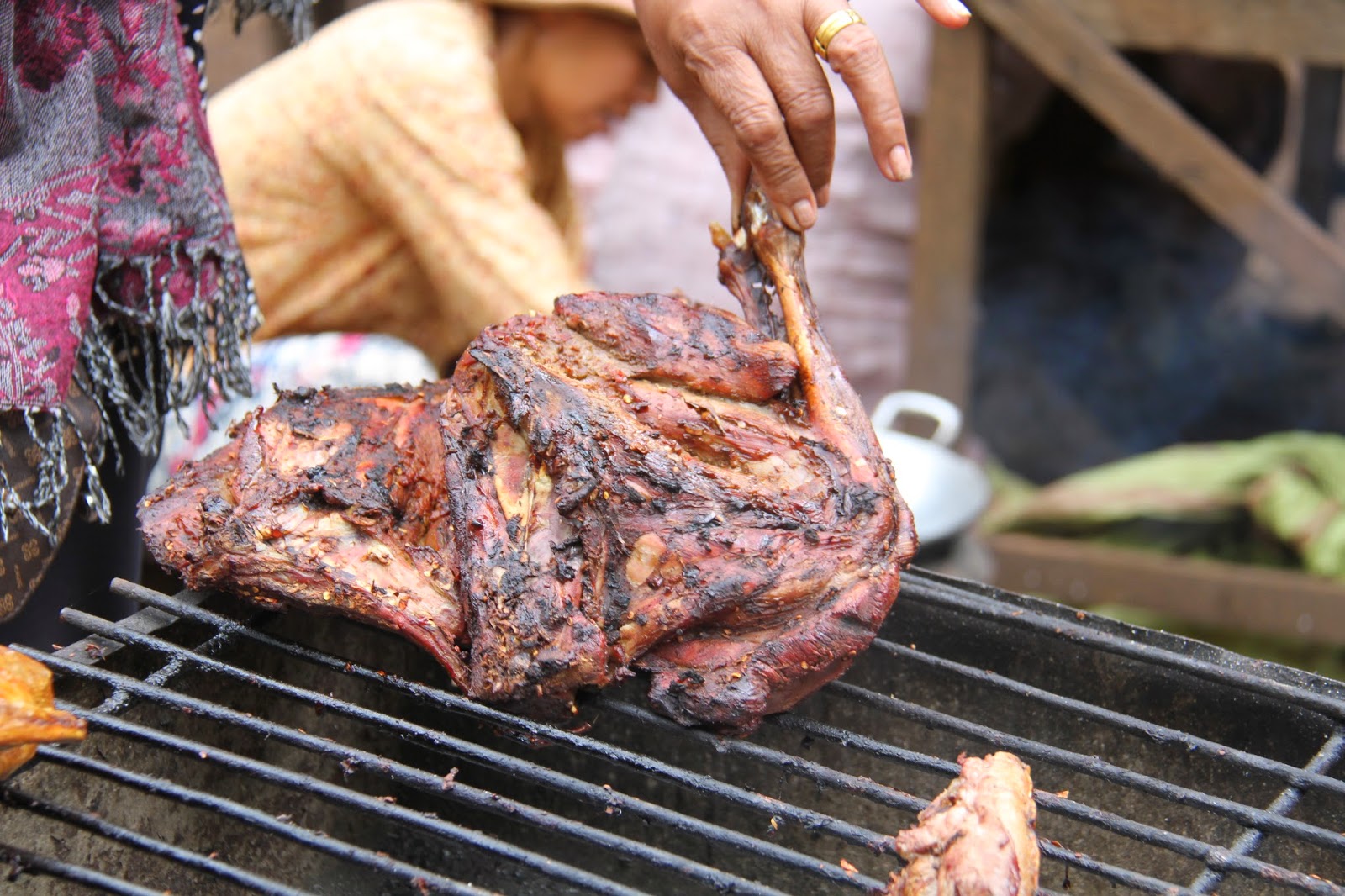 |
| A lady hand the red muntjac meat and negotiated the price Photo by: Siveun |
Wednesday, June 18, 2014
Cambodian children lives are under threaten
Cambodia currently has a total population of over 14 million people and has one of the youngest populations in Southeast Asia: with 41 per cent aged 18 and under, and more than a third between the ages of 10 and 24. Three decades of war and conflict, a post‐war boom and an average low life expectancy are reasons for this imbalance in demography.
While economic growth has propelled in the last decade, still 28 % of Cambodians live below the poverty line, having to survive on less than $1,25 a day, with children being the most vulnerable group. At these time of global financial crisis, the Asian Development Bank estimated that an additional 2 million people in Cambodia may have been forced into poverty as the cost of living (food, fuel and other commodities) have risen. As a consequence, an increasing number of women and children in Cambodia have been working in the informal sector in order to survive ‐ for lower wages, poorer conditions, and greater risk of exploitation and trafficking.
Without a formal social welfare system, there are concerns that the crisis will reverse the positive economic trends and push more Cambodian children into poverty, increasing their risk of ending on the streets.
In Cambodia, street children are primarily found in urban areas as cities are considered to have better economic and employment opportunities by migrants from the provinces. Based on information gathered by the Cambodia Street Children Network (CSCN) in 2008, more than 5600 street children were counted in 6 Cambodian cities in one day. This number obviously only indicates the actual number of children living and/or working on the street. However, the exact number is not known. Factors like seasonal fluctuations, regular migration and changing political and economical situations affect the actual number of street children.
The impact of street life on children and youth is significant. Unstable lifestyles, lack of medical care, lack of education and inadequate living conditions increase young people’s susceptibility to exploitation, unsafe migration and trafficking, substance abuse, chronic illness, sexual violence and sexually transmitted diseases.
Please see the video of the Transformer Actress Roise Huntington-Whiteley talked about the child life in Cambodia:
"Seth didn't choose to live here it's all she could afford. She didn't choose every single day surrounded by phial and disease. Seth didn't have a choice but you do" Roise Huntington-Whiteley Said.
Sunday, May 25, 2014
Rural poverty in Cambodia
 |
| Rural kid goes to the school photo by Siveun |
Although the Kingdom of
Cambodia is rich in natural resources, decades of war and internal conflict
have left it one of the world's poorest countries. The legacy of strife
includes social and economic scars. Many millions of land mines were sowed
throughout the countryside, where millions of them still lie, hidden and
unexploded. Mines are an enduring menace to the eight out of ten Cambodians who
live in rural areas, and they are an obstacle to agricultural development.
Cambodia's poor people number
almost 4.8 million, and 90 per cent of them are in rural areas. Most
of them depend on agriculture for their livelihood, but at least 12 per
cent of poor people are landless. Small-scale farmers practice agriculture at the
subsistence level, using traditional methods. Productivity is low.
Two thirds of the country's
1.6 million rural households face seasonal food shortages each year. Rice
alone accounts for as much as 30 per cent of household expenditures. Rural
people are constantly looking for work or other income-generating activities,
which are mainly temporary and poorly paid.
Landlessness is one of the
causes of a strong trend of internal migration that is also driven by the
pressures of rapid population growth and the desire to evade from recurring
flood and drought in lowland areas. People are moving from the more densely
populated provinces in the south and west to the more sparsely populated
provinces in the north-east, which include some of the country's poorest
districts.
Who are Cambodia's poor rural
people?
The country's poor people
include subsistence farmers, members of poor fishing communities, landless
people and rural youth, as well as internally displaced persons and mine
victims. Tribal peoples and women are generally the most disadvantaged.
Women in particular do not have
equal access to education, paid employment and land ownership and other
property rights. For many women, reproductive health services are inadequate or
non-existent. Many women had to assume the responsibility of heading their
households after male family members were killed in conflict.
Where are they?
Poverty rates are highest in
upland areas. The poorest people live in the districts close to the borders
with Thailand and the Lao People's Democratic Republic in the north and
north-east, and with Viet Nam in the east. Poverty is less severe in the
districts around Tonle Sap Lake and those in the Mekong River basin in the
south.
Cambodia's poorest people are
isolated. They live in remote villages, far from basic social services and
facilities. Many have to travel more than 5 km to reach a health clinic,
and still others live more than 5 km from the nearest road.
Why are they poor?
The pressures of a fast-growing
population contribute to poverty. Because of a lack of education and skills
training, people have inadequate employment opportunities and low capabilities.
They are insecure, excluded and vulnerable. They have limited access to natural
resources. Poor health, lack of education, poor infrastructure and low
productivity lead to deeper poverty. The cycle of poverty, ill health and high
health care expenditure cripples poor Cambodian families economically.
Rural
poverty and lack of opportunity in rural areas have contributed to the spread
of HIV AIDS, as young women migrate to urban factories and become sex workers
in neighbouring countries. Although HIV prevalence rates have shown a decrease,
the impact of the infection continues to be strong.
Source:
IFAD
Sunday, May 18, 2014
Bike Racing to Promote the People Culture and Nature in Mondulkiri
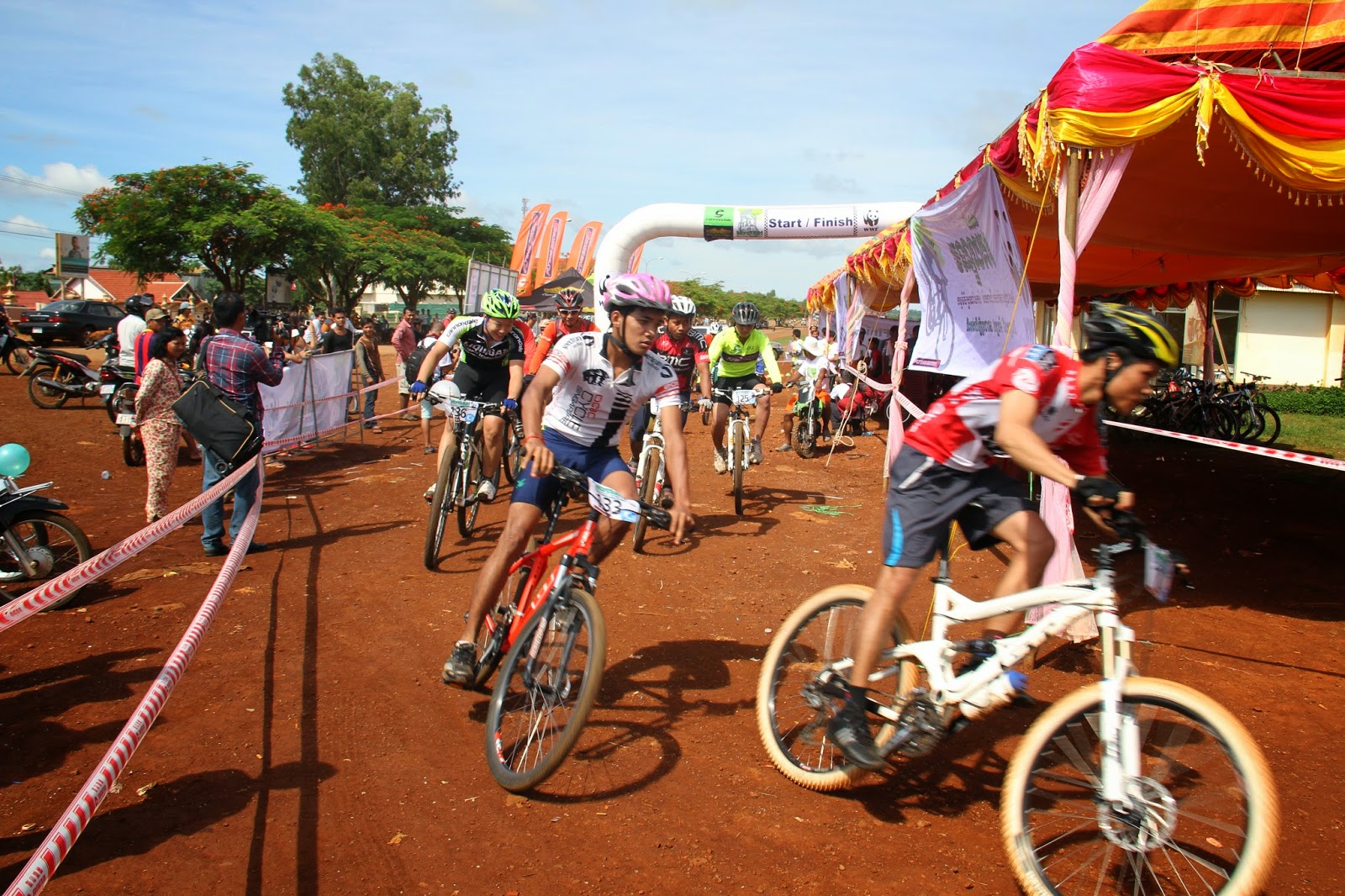
The Mondulkiri bike racing and fun to promote the tourism, natural resource management and livelihood development of the local community were held in 18 May 2014. This is the first event in Modulikiri with the supported fund by World Wild Fund for nature (WWF-Cambodia), a leaded conservation organization in Mondulkiri in partnership with the Mondulkiri provincial administration. The bike event encourage participants of all age and fitness level to cycle through the beautiful landscape, mountainous around Sen Monrum town.




 |
Photo Credit: Mr. Nhak Siveun
Saturday, May 10, 2014
The Bees Worker feed from medicinal grass


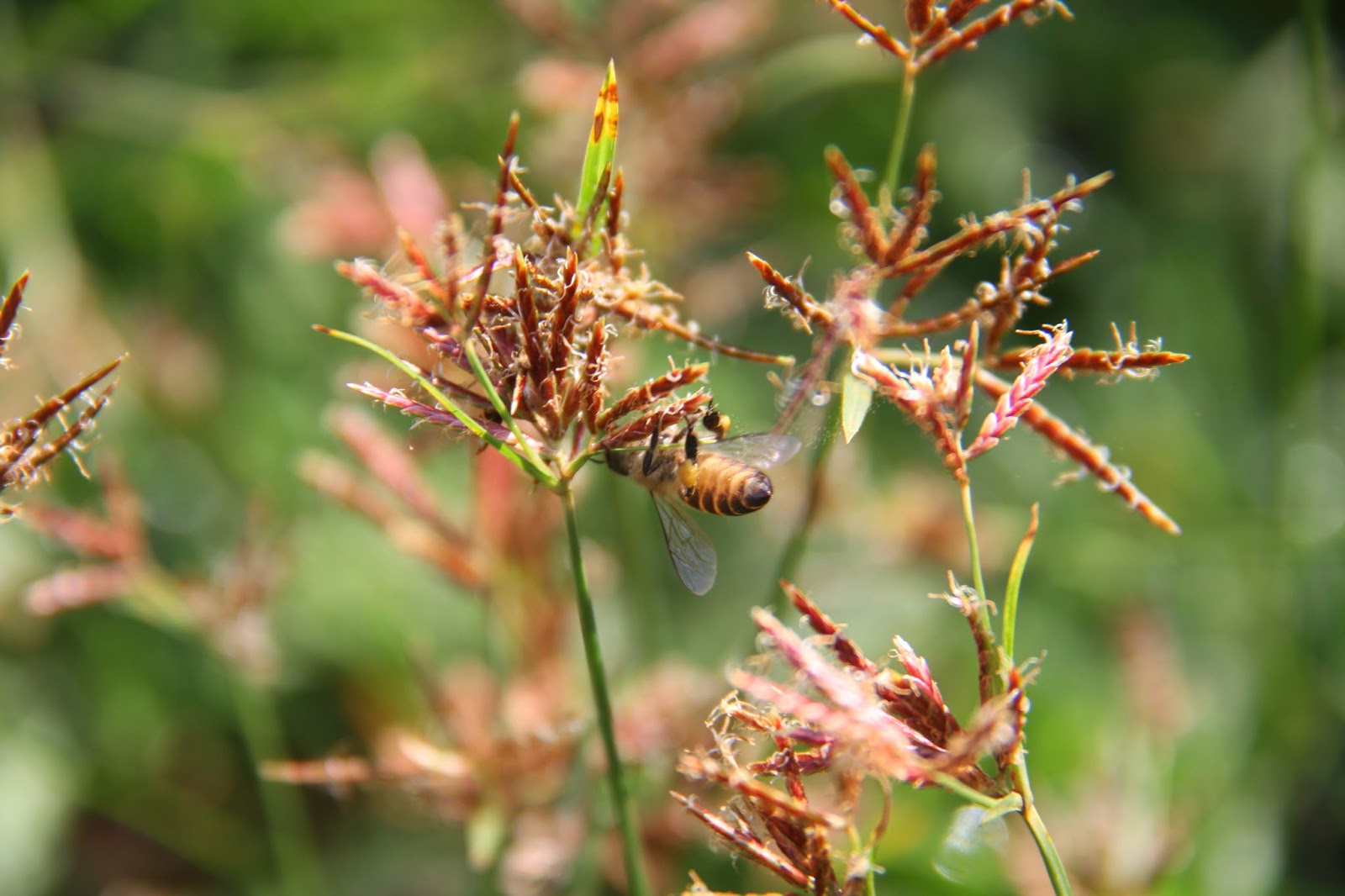 |
| Apis-Dosata are feeding from kind of medicinal grass (Cyperus Rotundus) |
 |
| kind of medicinal grass (Cyperus Rotundus) Photo:@Siveun Nhak |
Sunday, January 5, 2014
Step by Step (Dhammayietra)
 |
| Samdech Preah Maha Ghosananda |
In 1992, during the first year of the United Nations sponsored peace agreement, Maha Ghosananda led the first nationwide Dhammayietra, a peace march or pilgrimage, across Cambodia in an effort to begin restoring the hope and spirit of the Cambodian people.
The 16-day, 125-mile peace walk passed through territory still littered with landmines from the Khmer Rouge. The Dhammayietra became an annual walk which Maha Ghosananda led a number of times, despite the danger during the Khmer Rouge years. In 1995, the Dhammayietra consisted of almost 500 Cambodian Buddhist monks, nuns and precept-taking lay people. They were joined by The Interfaith Pilgrimage for Peace and Life. Together the two groups crossed Cambodia from the Thai border all the way to Vietnam, spending several days walking through Khmer Rouge-controlled territory along the way.
He had been called "the Gandhi of Cambodia." Maha Ghosananda was nominated for the Nobel Peace Prize by the chair of the U.S. Senate Foreign Relations Committee, Claiborne Pell. He was again nominated in 1995, 1996, and 1997 for his work in bringing peace to Cambodia.[3] He also acted as an adviser to the Buddhist Peace Fellowship and resided part-time in the Palelai Buddhist Temple and Monastery in Philadelphia, Pennsylvania, United States.
He died in Northampton, Massachusetts on March 12, 2007.
• The suffering of Cambodia has been deep.
• From this suffering comes Great Compassion.
• Great Compassion makes a Peaceful Heart.
• A Peaceful Heart makes a Peaceful Person.
• A Peaceful Person makes a Peaceful Family.
• A Peaceful Family makes a Peaceful Community.
• A Peaceful Community makes a Peaceful Nation.
•A Peaceful Nation makes a Peaceful World.
• May all beings live in Happiness and Peace.
Thursday, January 2, 2014
Role of Buddhism in Cambodian Life
Buddhist monks traditionally were called upon to perform a number of functions in Cambodian life. They participated in all formal village festivals, ceremonies, marriages, and funerals. They also might have participated
 |
| Cambodian lady offered the food to monk. Photo by Siveun |
After independence from France, young Cambodian intellectuals changed their attitude toward the clergy. In describing a general shift away from Buddhism in the late 1950s and the early 1960s, Vickery cites the early work of anthropologist May Mayko Ebihara and his own observations. He suggests that the Khmer Rouge was able to instill antireligious feelings in younger males because the latter were losing interest in becoming monks even
during their teenage years, the traditional temporary period of service. The monks themselves had abandoned some of their traditional restrictions and had become involved in politics. At intervals during the colonial period, some monks had demonstrated or had rebelled against French rule, and in the 1970s monks joined pro- government demonstrations against the communists. Anticlerical feelings reached their highest point among the Khmer Rouge, who at first attempted to indoctrinate monks and to force them to pass anticlerical ideas on to the laity. Under the Khmer Rouge regime, monks were expelled forcibly from the wats and were compelled to do manual labor. Article 20 of the 1976 Constitution of Democratic Kampuchea permitted freedom of religion but banned all reactionary religions, that were "detrimental to the country." The minister of culture stated that Buddhism was incompatible with the revolution and was an instrument of exploitation. Under this regime, to quote the Finnish Inquiry Commission, "The practice of religion was forbidden and the pagodas were systematically destroyed." Observers estimated that 50,000 monks died during the Khmer Rouge regime. The status of Buddhism and of religion in general after the Vietnamese invasion was at least partially similar to its status in pre-Khmer Rouge times.
 |
| Cambodian monk raised the banner against Hun Sen Photo from Facebook |
According to Michael Vickery, who has written positively about the People's Republic of Kampuchea, public observance of Buddhism and of Islam was reestablished, and government policies allowed Cambodians freedom to believe or not to believe in Buddhism. Vickery cites some differences in this reestablished Buddhism: Religious affairs were overseen by the PRK's Kampuchean (or Khmer) United Front for National Construction and Defense (KUFNCD), the mass organization that supported the state by organizing women, youths, workers, and religious groups. In 1987 there was only a single Buddhist order because the Thommayut order had not been revived. The organization of the clergy also had been simplified. The sangharaja (primate of the Buddhist clergy) had been replaced by a prathean (chairman). Communities that wanted wats had to apply to a local front committee for permission. The wat were administered by a committee of the local laity. Private funds paid for the restoration of the wats damaged during the war and the Khmer Rouge era, and they supported the restored wats. Monks were ordained by a hierarchy that has been reconstituted since an initial ordination in September 1979 by a delegation from the Buddhist community in Vietnam. The validity of this ordination continued to be questioned. In general, there are only two to four monks per wat, which is fewer than before 1975. In 1981 about 4,930 monks served in 740 wats in Cambodia. The Buddhist General Assembly reported 7,000 monks in 1,821 active wats a year later. In 1969 by contrast, observers estimated that 53,400 monks and 40,000 novice monks served in more than 3,000 wats. Vickery sums up his observations on the subject by noting that, "The government has kept its promise to allow freedom for traditional Buddhism, but does not actively encourage it."
Martin offers another, more pessimistic, view of the religious situation in the late 1980s. In a 1986 study, she asserts that the PRK showed outsiders only certain aspects of religious freedom; she also states that the few wats that were restored had only two or three old monks in residence and that public attendance was low. The monks were allowed to leave the wats only for an hour in the mornings, to collect their food, or during holy days. Lay people who practiced their faith were about the same ages as the monks, and they were allowed to visit the wats only in the evenings. Agovernment circular had also instructed civil servants to stop celebrating the traditional New Year Festival. Some traditional Buddhist festivals still were tolerated, but the state collected a 50 percent tax on donations. Martin believes that Buddhism was threatened externally by state repression and by nonsupport and internally by invalid clergy. She noted that the two Buddhist superiors, Venerable Long Chhim and Venerable Tep Vong, were both believed to be from Vietnam. Venerable Tep Vong was concurrently the superior of the Buddhist clergy, vice president of the PRK's Khmer National Assembly, and vice president of the KUFNCD National Council. She quoted a refugee from Batdambang as having said, "During the meetings, the Khmer administrative authorities, accompanied by the Vietnamese experts, tell you, `Religion is like poison, it's like opium; it's better to give the money to the military, so they can fight'."
Buddhism is still strong among the various Cambodian refugee groups throughout the world, although some younger monks, faced with the distractions of a foreign culture, have chosen to leave the clergy and have become laicized. In the United States in 1984, there were twelve Cambodian wats with about twenty-one monks. In the 1980s, a Cambodian Buddhist wat was constructed near Washington, D.C., financed by a massive outpouring of donations from Cambodian Buddhists throughout North America. This wat is one of the few outside Southeast Asia that has the consecrated boundary within which ordinations may be performed.
Most of the major Cambodian annual festivals are connected with Buddhist observances. The chol chnam (New Year Festival) takes place in mid-April; it was one of the few festivals allowed under the Khmer Rouge regime. The phchun ben, celebrated in September or in October, is a memorial day for deceased ancestors and for close friends. Meak bochea, in January or February, commemorates the last sermon of the Buddha. Vissakh bochea, in April or in May, is the triple anniversary of the birth, death, and enlightenment of the Buddha. The chol vossa takes place in June or in July; it marks the beginning of a penitential season during which the monks must remain within the temple compounds. The kathen marks the end of this season; celebrated in September, it features offerings, especially of robes, to the monks. The kathen was still celebrated in the PRK in the late 1980s.
Cambodian Buddhism exists side-by-side with, and to some extent intermingles with, pre-Buddhist animism and Brahman practices. Most Cambodians, whether or not they profess to be Buddhists (or Muslims), believe in a rich supernatural world. When ill, or at other times of crisis, or to seek supernatural help, Cambodians may enlist the aid of a practitioner who is believed to be able to propitiate or obtain help from various spirits. Local spirits are believed to inhabit a variety of objects, and shrines to them may be found in houses, in Buddhist temples, along roads, and in forests.
Several types of supernatural entities are believed to exist; they make themselves known by means of inexplicable sounds or happenings. Among these phenomena are khmoc (ghosts), pret and besach (particularly nasty demons, the spirits of people who have died violent, untimely, or unnatural deaths), arak (evil spirits, usually female), neak ta (tutelary spirits residing in inanimate objects), mneang phteah (guardians of the house), meba (ancestral spirits), and mrenh kongveal (elf-like guardians of animals). All spirits must be shown proper respect, and, with the exception of the mneang phteah and mrenh kongveal, they can cause trouble ranging from mischief to serious life-threatening illnesses. An important way for living people to show respect for the spirits of the dead is to provide food for the spirits. If this food is not provided, the spirit can cause trouble for the offending person. For example, if a child does not provide food for the spirit of its dead mother, that spirit can cause misfortunes to happen to the child. Aid in dealing with the spirit world may be obtained from a kru (shaman or spirit practitioner), an achar (ritualist), thmup (witch, sorcerer or sorceress), or a rup arak (medium, usually male). The kru is a kind of sorcerer who prepares charms and amulets to protect the wearer from harm. He can cure illnesses, find lost objects, and prepare magic potions. Traditionally, Cambodians have held strong beliefs about protective charms. Amulets are worn routinely by soldiers to ward off bullets, for example. The kru are believed to have the power to prepare an amulet and to establish a supernatural link between it and the owner. A kru may acquire considerable local prestige and power. Many kru are former Buddhist monks. Another kind of magical practitioner is the achar, a specialist in ritual. He may function as a kind of master of ceremonies at a wat and as a specialist in conducting spirit worship rituals connected with life-cycle ceremonies. Rup arak are mediums who can be possessed by supernatural beings and communicate with the spirit world. The thmup are sorcerers who cause illnesses.
Fortunetellers and astrologers—haor teay—are important in Cambodian life. They are consulted about important decisions such as marriages, building a new house, or going on a long journey. They are believed to be able to foretell future events and to determine lucky or unlucky days for various activities.
Villagers are sensitive to the power and to the needs of the spirit world. According to observations by an American missionary in the early 1970s, villagers consulted the local guardian spirit to find out what the coming year would bring, a new province chief held a ceremony to ask the protection of the spirits over the province, and soldiers obtained magic cloths and amulets from mediums and shamans to protect them from the bullets of the enemy. Before embarking on a mission against enemy forces, a province chief might burn incense and call on a spirit for aid in defeating the enemy. Examples of Brahman influences were various rituals concerned with the well-being of the nation carried out by the ruler and the baku (a Brahman priestly group attached to the royal court). These rituals were reportedly stopped after Sihanouk's ouster in 1970 (see The March 1970 Coup d'État, ch. 1).
Wednesday, December 25, 2013
Saturday, November 30, 2013
Banteng (ទន្សោង)

Tuesday, October 8, 2013
Sunday, October 6, 2013
Flooding Report: Flood in Cambodia
 |
| Flood destroy rice field along the road from Seam Reap |
Rising global temperatures could greatly exacerbate flooding in Southeast Asian countries such as Cambodia, as well as parts of Africa and South America, a new study by the University of Tokyo has found.
The study, produced by the university’s Institute of Engineering and published in the British science journal Nature Climate Change yesterday, warns that the world’s 29 major rivers, including the Mekong, face escalating risks of mass flooding if climate change continues apace.
Employing 11 different climate models, researchers found that with a mere rise of 3.5 degrees by the end of the century, 42 per cent of the earth’s land surface would face an increased risk of flooding, affecting 100 million people.
From mid Sept to October 04, 2013, Floods from Mekong River and heavy rainfall have claimed at least 39 lives and affected 100,334 families in Cambodia in less than three weeks, in 09 Provinces in Cambodia are flooding; Prah Vihear, Banteaymeanchey, Stungtreng, Kratie, Kampong Cham, Kandal, Odormeanchey, Prey Veng, Ratanakiri. the National Committee for Disaster Management (NCDM) said Thursday.
About 10,000 families have been forced to flee their houses for higher grounds as some 89,200 houses, 533 schools and 291 Buddhist pagodas have been submerged, a NCDM's report said.
In addition, approximately 100,000 hectares of rice seedlings are also inundated, the report said.Thirteen out of the kingdom's 24 cities and provinces are being hit by the Mekong River and flash floods, it added.
The country has suffered from the impact of low pressure system and tropical storm Wutip that had caused heavy rainfall in the Mekong River basin and in Cambodia.
"The government would like to advise concerned ministries and authorities to be on high alert and prepare rescue measures to evacuate people to safe grounds so that fatalities and property damage by floods will be reduced," he said in a directive.
Floods usually hit Cambodia between August and October. In 2011, the country was hit the worst from floods, killing up to 250 people, according to the NCDM.
Last year, floods killed only 14 people.
Sunday, September 29, 2013

Saturday, September 14, 2013
Cambodia and its people
First video edition by Siveun
Cambodia located in Southeast Asia shared the borders with LAO, Thailand and Vietnam.
Cambodia has a rich of natural resources and oldest culture in the world.
But there are some remaining challenges and problem to be question and asked for help.
About million people live under poor line, malnutrition, can't access to clean water, education, health care information and opportunity to improve the living condition.
Watch the video and share me your ideas!!!
Wednesday, September 11, 2013
Tuesday, September 10, 2013
Monday, September 2, 2013
Gaur (ខ្ទីង)
The gaur (/ˈɡaʊər/, Bos gaurus), also called Indian bison, is the largest extant bovine and is native to South Asia and Southeast Asia. The species is listed as vulnerable on the IUCN Red List since 1986, as the population decline in parts of the species' range is likely to be well over 70% during the last three generations. Population trends are stable in well-protected areas, and are rebuilding in a few areas which had been neglected.
The gaur is the tallest species of wild cattle. The Cambodian called Khting (ខ្ទីង).
 |
| Gaur / Bos gaurus |
| Conservation status | |
|---|---|
 |
Characteristic
The gaur is a strong and massively built species with a high convex ridge on the forehead between the horns, which bends forward, causing a deep hollow in the profile of the upper part of the head. There is a prominent ridge on the back. The ears are very large; the tail only just reaches the hocks, and in old bulls the hair becomes very thin on the back. In colour, the adult male gaur is dark brown, approaching black in very old individuals; the upper part of the head, from above the eyes to the nape of the neck, is, however, ashy grey, or occasionally dirty white; the muzzle is pale coloured, and the lower part of the legs are pure white or tan. The cows and young bulls are paler, and in some instances have a rufous tinge, which is most marked in groups inhabiting dry and open districts. The tail is shorter than in the typical oxen, reaching only to the hocks. They have a distinct ridge running from the shoulders to the middle of the back; the shoulders may be as much as 12 cm (4.7 in) higher than the rump. This ridge is caused by the great length of the spinous processes of the vertebrae of the fore-part of the trunk as compared with those of the loins. The hair is short, fine and glossy, and the hooves are narrow and pointed. The gaur has a head-and-body length of 250 to 330 cm (8.2 to 10.8 ft) with a 70 to 105 cm (28 to 41 in) long tail, and is 165 to 220 cm (5.41 to 7.2 ft) high at the shoulder. The average weight is 650 to 1,000 kg (1,400 to 2,200 lb), with an occasional large bull weighing up to 1,500 kg (3,300 lb). Males are about one-fourth larger and heavier than females.
Gaur do not have a distinct dewlap on the throat and chest. Both sexes carry horns, which grow from the sides of the head, curving upwards. Between the horns is a high convex ridge on the forehead. At their bases they present an elliptical cross-section, a characteristic that is more strongly marked in bulls than in cows. The horns are decidedly flattened at the base and regularly curved throughout their length, and are bent inward and slightly backward at their tips. The colour of the horns is some shade of pale green or yellow throughout the greater part of their length, but the tips are black. The horns, of medium size by large bovid standards, grow to a length of 60 to 115 cm (24 to 45 in).
The cow is considerably lighter in make and in colour than the bull. The horns are more slender and upright, with more inward curvature, and the frontal ridge is scarcely perceptible. In young animals the horns are smooth and polished. In old bulls they are rugged and dented at the base.
Gaur are among the largest living land animals. Only elephants, rhinos, the hippopotamus and the giraffe consistently grow heavier. Two species that naturally co-exist with the gaur are heavier: the Asian elephant and Indian rhinoceros.
Distribution and Habitat
Gaur is historically occurred throughout mainland South and Southeast Asia, including Vietnam, Cambodia, Laos, China, Thailand, Peninsular Malaysia, Myanmar, India, Bangladesh, Bhutan and Nepal. Today, the species is seriously fragmented within its range, ad regionally extinct in Sri Lanka.
In Cambodia, gaur declined considerably in the period from the late 1960s to the early 1990s. The most substantial population of the country remained in Mondulkiri Province, where up to 1000 individuals may have survived in a forested landscape of over 15,000 km2 (5,800 sq mi). Results of camera trapping carried out in 2009 suggested a globally significant population of gaur in the Mondulkiri Protected Forest and the contiguous Phnom Prich Wildlife Sanctuary.
- Channa, P., Sovanna, P., Gray, T. N. E. (2010). Recent camera trap records of globally threatened species from the Eastern Plains Landscape, Mondulkiri. Cambodian Journal of Natural History 2010 (2): 89–93.
Ecology and behavior

Where gaur have not been disturbed, they are basically diurnal. In other areas, they have become largely nocturnal due to forest molestation caused by people. In central India, they are most active at night, and are rarely seen in the open after 8 o'clock in the morning. During the dry season, herds congregate and remain in small areas, dispersing into the hills with the arrival of the monsoon. While gaur depend on water for drinking, they do not seem to bathe or wallow.
In January and February, gaur live in small herds of eight to 11 individuals, one of which is a bull. In April or May, more bulls may join the herd for mating, and individual bulls may move from herd to herd, each mating with many cows. In May or June, they leave the herd and may form herds of bulls only or live alone. Herds wander 2–5 km (1.2–3.1 mi) each day. Each herd has a nonexclusive home range, and sometimes herds may join in groups of 50 or more.[20] The average population density is about 0.6 animals per square kilometre (1.5 animals per square mile), with herds having home ranges of around 80 km2 (31 sq mi).
Gaur herds are led by an old adult female, the matriarch. Adult males may be solitary. During the peak of the breeding season, unattached males wander widely in search of receptive females. No serious fighting between males has been recorded, with size being the major factor in determining dominance. Males make a mating call of clear, resonant tones which may carry for more than 1.6 km (0.99 mi). Gaur have also been known to make a whistling snort as an alarm call, and a low, cow-like moo.
In some regions in India where human disturbance is minor, the gaur is very timid and shy. When alarmed, gaur crash into the jungle at a surprising speed. However, in Southeast Asia and South India, where they are used to the presence of humans, gaur are said by locals to be very bold and aggressive. They are frequently known to go into fields and graze alongside domestic cattle, sometimes killing them in fights. Gaur bulls may charge unprovoked, especially during summer, when the intense heat and parasitic insects make them more short-tempered than usual. To warn other members of its herd of approaching danger, the gaur lets out a high whistle for help.
Feeding
_in_Ananthagiri_forest,_AP_W_IMG_9369.jpg) |
| Adina cordifolia (Haldina) tree leaves |
Wild gaur graze and browse on a wider variety of plants than any other ungulate species of India, with a preference for the upper portions of plants, such as leaf blades, stems, seeds and flowers of grass species, including kadam.
During a survey in the Bhagwan Mahaveer Sanctuary and Mollem National Park, 32 species of plants were identified as food for gaur. They consume herbs, young shoots, flowers, fruits of elephant apple with a high preference for leaves. Food preference varies by season. In winter and monsoon, they feed on preferably fine and fresh grasses and herb species of the legume family, such as tick clover, but also browse on leaves of shrub species such as karvy, Indian boxwood, mallow-leaved crossberry, East-Indian screw tree and chaste tree. In summer, they also feed on bark of teak, on fruit ofgolden shower tree, and on the bark and fruit of cashew. Gaur spent most of their daily time feeding. Peak feeding activity was observed between 6:30 and 8:30 am and between 5:30 and 6:45 pm. During the hottest hours of the day, 1:30 to 3:30 pm, they rest in the shade of big trees.
They may debark trees due to shortages of preferred food, and of minerals and trace elements needed for their nutrition, or for maintaining an optimum fiber/protein ratio for proper digestion of food and better assimilation of nutrients. They may turn to available browse species and fibrous teak bark in summer as green grass and herbaceous resources dry up. High concentrations of calcium (22400 ppm) and phosphorus (400 ppm) have been reported in teak bark, so consumption of teak bark may help animals to satisfy both mineral and other food needs. Long-term survival and conservation of these herbivores depend on the availability of preferred plant species for food. Hence, protection of the historically preferred habitats used by gaur is a significant factor in conservation biology.
Reproduction
Gaur have one calf (or occasionally two) after a gestation period of about 275 days, about nine months, a few days less than domestic cattle. Calves are typically weaned after seven to 12 months. Sexual maturity occurs in the gaur's second or third year. Breeding takes place year-round, but typically peaks between December and June. The lifespan of a gaur in captivity is up to 30 years.
Natural Enemies
Due to their formidable size and power, gaur have few natural enemies. Leopards and dhole packs occasionally attack unguarded calves or unhealthy animals, but only the tiger and the saltwater crocodile have been reported to kill a full-grown adult. The habitat of gaurs and saltwater crocodiles seldom overlaps in recent times due to the decreasing range of both species. Tigers hunt young or infirm gaur, but have been reported to have also killed healthy bulls weighing at least 1,000 kg (2,200 lb). When confronted by a tiger, the adult members of a gaur herd often form a circle surrounding the vulnerable young and calves, shielding them from the big cat. A herd of gaur in Malaysia encircled a calf killed by a tiger and prevented it from approaching the carcass. InNagarahole National Park, upon sensing a stalking tiger, a herd of gaur walked as a menacing phalanx towards it, forcing the tiger to retreat and abandon the hunt. Gaur are not as aggressive toward humans as wild Asian water buffaloes.
There are several cases of tigers being killed by gaur. In one instance, a tiger was repeatedly gored and trampled to death by a gaur during a prolonged battle. A large male tiger carcass was found beside a small, broken tree in Nagarahole National Park, having been fatally struck against the tree by a large bull gaur a few days earlier.
Treat

In Laos, gaurs are highly threatened by poaching for trade to supply international markets, but also by opportunistic hunting, and specific hunting for home consumption. In the 1990s, they were particularly sought by Vietnamese poachers for their commercial value.
In Thailand, gaurs are highly threatened by poaching for commercial trade in meat and trophies.
Conservation
Bos gaurus is listed in CITES Appendix I, and is legally protected in all range states.
- Duckworth, J.W., Steinmetz, R., Timmins, R.J., Pattanavibool, A., Than Zaw, Do Tuoc, Hedges, S. (2008). "Bos gaurus". IUCN Red List of Threatened Species. Version 2012.2.International Union for Conservation of Nature.
More information: Click Here
Subscribe to:
Comments (Atom)